
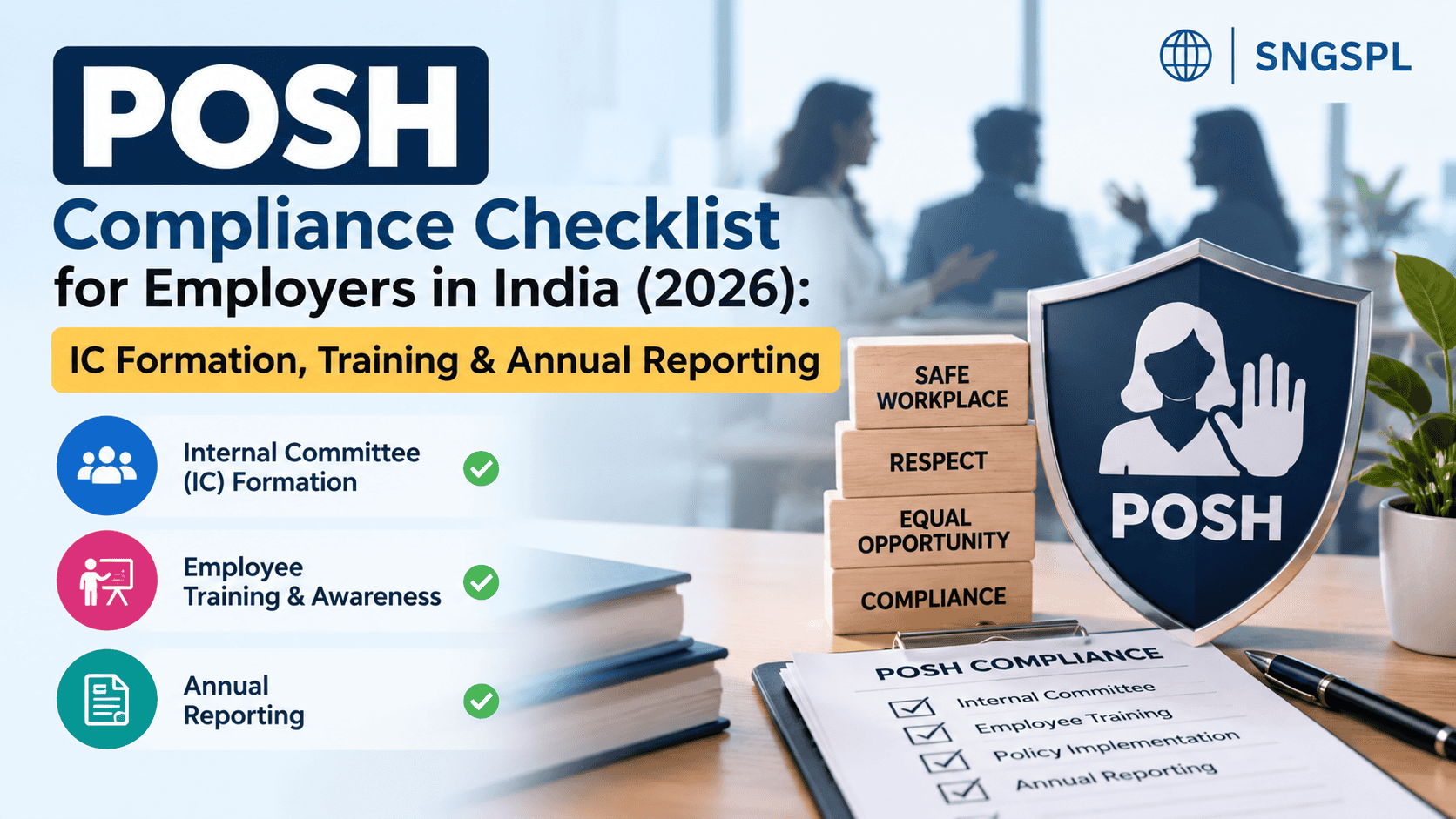
POSH Compliance Checklist for Employers in India (2026): IC Formation, Training & Annual Reporting
Sexual harassment at the workplace is not just an employee relations issue. It is a matter of workplace safety, legal compliance and organisational responsibility.
In India, the Sexual Harassment of Women at Workplace (Prevention, Prohibition and Redressal) Act, 2013, commonly known as the POSH Act, requires employers to take specific steps to prevent sexual harassment and provide a proper complaint redressal mechanism.
However, many organisations are unsure whether they have constituted their Internal Committee correctly, completed employee awareness programmes, displayed the required notices or fulfilled annual reporting obligations.
Missing these responsibilities can expose an organisation to legal and reputational risks.
This POSH compliance checklist for employers in India explains the key requirements businesses should review in 2026, including Internal Committee formation, employee training, complaint handling, documentation and annual reporting.
The Presiding Officer and members can hold office for a period specified by the employer, not exceeding three years from the date of nomination.
The Act also provides for conciliation before an inquiry, at the request of the aggrieved woman, subject to its conditions. Monetary settlement cannot be made the basis of conciliation.
Organisations should review this checklist periodically and maintain supporting evidence for each applicable requirement.
What Is the POSH Act in India?
The POSH Act, 2013, was introduced to protect women from sexual harassment at the workplace and establish a mechanism for preventing and addressing complaints. The Act places responsibilities on employers to:- Provide a safe working environment.
- Constitute an Internal Committee where applicable.
- Display information about the POSH policy and complaint mechanism.
- Conduct employee awareness programmes.
- Organise training for Internal Committee members.
- Support fair and timely complaint inquiries.
- Maintain confidentiality.
- Fulfil applicable annual reporting requirements.
1. Constitute an Internal Committee (IC)
One of the most important POSH compliance requirements is the constitution of an Internal Committee (IC). Under Section 4 of the POSH Act, every workplace employing 10 or more employees must constitute an Internal Committee through a written order. If an organisation operates from multiple offices or administrative units, the committee must be constituted at the applicable offices or units as required by the Act.Internal Committee composition
The Internal Committee must include:| Position | Requirement |
| Presiding Officer | A senior-level woman employee |
| Employee Members | At least two employees |
| External Member | One person from an eligible NGO, association or a person familiar with issues relating to sexual harassment |
| Women Representation | At least half of the total members must be women |
Employer checklist
- Issue a formal written order constituting the Internal Committee.
- Appoint an eligible woman employee as Presiding Officer.
- Nominate at least two employee members.
- Appoint an eligible external member.
- Ensure at least 50% of committee members are women.
- Check the committee’s tenure and update appointments when required.
- Constitute committees for applicable offices and administrative units.
2. Prepare and Display the POSH Policy
Every organisation should have a clearly documented POSH policy explaining its approach to preventing and addressing sexual harassment. A written policy helps employees understand unacceptable conduct, reporting channels and the organisation’s complaint-handling process.What should the POSH policy include?
- Definition and examples of sexual harassment.
- Scope and applicability of the policy.
- Details of the Internal Committee.
- Complaint submission procedure.
- Inquiry and redressal process.
- Confidentiality requirements.
- Protection against retaliation.
- Disciplinary action for established misconduct.
- Roles and responsibilities of employees and management.
Employer checklist
- Prepare and approve a written POSH policy.
- Communicate the policy to all employees.
- Display the required information at the workplace.
- Share the complaint submission process.
- Provide accessible contact details for the Internal Committee.
- Review the policy periodically.
3. Conduct POSH Awareness Training for Employees
A POSH policy is effective only when employees understand it. Employers should organise regular awareness programmes to explain workplace conduct, employee rights and the process for reporting incidents. Training should cover employees at different levels, including new joiners, managers, supervisors and senior leadership.Topics to cover during POSH awareness sessions
- Meaning and examples of workplace sexual harassment.
- Appropriate and inappropriate workplace behaviour.
- Employee rights and responsibilities.
- How to report a complaint.
- Role of the Internal Committee.
- Confidentiality and protection against retaliation.
- Consequences of established misconduct.
Employer checklist
- Conduct POSH awareness sessions for employees.
- Include POSH information in employee induction.
- Maintain attendance records.
- Keep copies of training materials.
- Record training dates and session details.
- Conduct refresher sessions when required.
4. Train Internal Committee Members
Internal Committee members play a critical role in handling complaints fairly and following the prescribed inquiry procedure. They should understand the POSH Act, applicable rules, principles of natural justice, confidentiality and documentation requirements.Key training areas
- Understanding the POSH Act and Rules.
- Receiving and recording complaints.
- Conducting fair and impartial inquiries.
- Maintaining confidentiality.
- Evaluating evidence and statements.
- Preparing inquiry reports.
- Recommending appropriate action.
- Understanding statutory timelines.
Employer checklist
- Provide appropriate training to IC members.
- Explain inquiry procedures and responsibilities.
- Maintain training and participation records.
- Arrange refresher training when needed.
- Review whether committee members understand their roles.
5. Establish a Proper Complaint Handling Process
Employers must ensure that employees know how to submit complaints and that the Internal Committee can handle them according to the Act. A complaint of sexual harassment should generally be made in writing within three months of the incident or, in the case of a series of incidents, within three months of the last incident. The Internal Committee may extend this period by a further period of up to three months where the statutory conditions are met and reasons are recorded.Important complaint inquiry timelines
| Activity | Timeline under the Act |
| Submission of complaint | Generally within 3 months of the incident or last incident |
| Extension for filing complaint | Up to a further 3 months, subject to statutory conditions |
| Completion of inquiry | Within 90 days |
| Submission of inquiry report | Within 10 days of completion of inquiry |
| Employer action on recommendations | Within 60 days of receiving the recommendations |
Employer checklist
- Provide a clear complaint submission channel.
- Ensure the Internal Committee is accessible.
- Record complaints securely.
- Follow the prescribed inquiry procedure.
- Maintain relevant records and documentation.
- Observe statutory timelines.
- Implement recommendations within the applicable period.
- Protect the confidentiality of everyone involved.
6. Maintain Confidentiality During POSH Proceedings
Confidentiality is an essential part of POSH compliance. Section 16 of the Act restricts the publication or communication of information relating to complaints, the identities of the parties and witnesses, conciliation and inquiry proceedings, recommendations and action taken. Employers should ensure that complaint-related information is shared only with authorised persons for legitimate purposes.Employer checklist
- Restrict access to complaint records.
- Store inquiry documents securely.
- Avoid sharing identities or case details unnecessarily.
- Brief IC members and relevant employees on confidentiality.
- Avoid discussing ongoing cases in public or informal channels.
- Maintain appropriate records of actions taken.
7. Submit the POSH Annual Report
Annual reporting is another important part of POSH compliance. Under Section 21, the Internal Committee must prepare an annual report and submit it to the employer and the District Officer. The report includes prescribed information such as:- Number of complaints received during the year.
- Number of complaints disposed of.
- Number of cases pending for more than 90 days.
- Number of awareness programmes or workshops conducted.
- Nature of action taken by the employer or District Officer.
Employer checklist
- Collect the required information from the Internal Committee.
- Prepare the annual report.
- Submit it to the employer and District Officer as required.
- Maintain a copy of the submitted report.
- Include the required POSH information in the organisation’s annual report, where applicable.
- Track pending cases and reporting obligations.
8. Register and Update Workplace Details on the SHe-Box Portal
The Ministry of Women and Child Development operates the Sexual Harassment Electronic Box (SHe-Box) portal. It provides a centralised online platform to help women access information about Internal Committees and Local Committees and submit complaints. Employers should review the portal and follow applicable government directions regarding workplace and committee details. Official portal: https://shebox.wcd.gov.in/Employer checklist
- Review the SHe-Box portal.
- Check applicable registration and onboarding requirements.
- Verify Internal Committee information.
- Update relevant workplace and committee details where required.
- Ensure the organisation’s complaint mechanism is correctly communicated.
Complete POSH Compliance Checklist for Employers in India (2026)
Use the following checklist to review your organisation’s POSH compliance status.| Compliance Area | Action Required |
| Internal Committee | Constitute an IC where the Act requires it |
| Committee Composition | Verify all member positions and gender representation |
| Written Order | Issue and maintain the IC constitution order |
| POSH Policy | Prepare and communicate the policy |
| Workplace Display | Display required notices and IC details |
| Employee Awareness | Conduct awareness programmes |
| IC Training | Train committee members |
| Complaint Mechanism | Establish accessible reporting channels |
| Inquiry Procedure | Follow statutory procedures and timelines |
| Confidentiality | Protect complaint-related information |
| Annual Reporting | Prepare and submit applicable reports |
| SHe-Box | Review portal requirements and committee information |
| Documentation | Maintain policies, orders, training and reporting records |
What Are the Penalties for Non-Compliance with the POSH Act?
Employers should take POSH compliance seriously because the Act provides penalties for non-compliance. Under Section 26, an employer who fails to:- Constitute an Internal Committee as required under Section 4.
- Take action under Sections 13, 14 and 22.
- Contravene or attempt to contravene other provisions of the Act or its Rules.
How SNGSPL Can Help with POSH Compliance
Managing POSH compliance requires more than preparing a policy document. Employers need to ensure that the Internal Committee is properly constituted, employees understand the reporting process, training is conducted and records are maintained. SNGSPL supports organisations with compliance-related services and guidance to help them strengthen their workplace compliance processes. Our POSH-related support can help businesses review areas such as:- POSH policy documentation.
- Internal Committee constitution support.
- Employee awareness and training coordination.
- Internal Committee training support.
- Compliance documentation and record review.
- Annual reporting readiness.